Monday, July 20, 2026

Qigong Gorilla has moved to WordPress


Qigong Gorilla has moved to WordPress

Qigong Gorilla has migrated from its old home at qigor.blogspot.com to a new WordPress home right here at qigor.lucid24.org. One upgrade over Blogger: you can now subscribe by email and get new posts delivered to your inbox. Sign up here: No need to worry about inbox overload — posts will be occasional, averaging less than…

Read more →

Sunday, November 2, 2025

my 75 year old uncle doing 13 pullups


Just writing that down so I don't forget.

I saw a celphone video of my uncle a few years ago that was really impressive.

my relatives probably still have that video saved somewhere.


He did 13 pullups, nice and slow, all the way up, all the way down,

relaxed, no visible strain, no muscle quivering.


I'm 55 y.o. and can only do about 7 pullups right now.

If I worked on it, I could probably get to around 10 pullups in a few weeks.

But energy is valuable, you need more food, more sleep, if you want to be stronger in that way.

So I'm not going to do that unless I can see how it benefits meditation in some way.


But I am really impressed by my uncle!

He must have very consistent, daily training for many decades to be able to do that easily.

84 yr old, started training to be stronger, more active at 65.

 I have many of the same habits as she does.
Exercising easy to moderate cardio/strength/pliability training every single day,
enjoying it, which is key to sustainability,
being disciplined about eating healthy, preparing portions for days at a time and freezing,


Another 81 yr old active lady


Monday, December 9, 2024

longevity, superagers: She’s 102 years old, thriving, active and living life on her own terms


She’s 102 years old, thriving, active and living life on her own terms

Hilda Jaffe is an extraordinary example of a ‘superager.’
 What sets her apart?

December 8, 2024 

Hilda Jaffe, 102, in her apartment in New York.
 Jaffe enjoys doing puzzles, reading, volunteering and attending cultural events.
 (Jackie Molloy for KFF Health News)
Guest column by Judith Graham

“The future is here,” the email announced.
 Hilda Jaffe, then 88, was letting her children know that she planned to sell the family home in Verona, New Jersey.
 She’d decided to begin life anew on her own in a one-bedroom apartment in Hell’s Kitchen in Manhattan.


Fourteen years later, Jaffe, now 102, still lives alone — just a few blocks from the frenetic lights and crowds that course through Times Square.


She’s the rarest of seniors:
 a centenarian who is as sharp as a tack, who carries grocery bags in each hand when she walks back from her local market, and who takes city buses to see her physicians or attend a matinee at the Metropolitan Opera.


Jaffe is an extraordinary example of an older adult living by herself and thriving.
 She cleans her own house, does her own laundry, manages her own finances, and stays in touch with a far-flung network of family and friends via email, WhatsApp and Zoom.
 Her 78-year-old son lives in San Jose.
 Her 75-year-old daughter lives in Tel Aviv.

“My primary-care doctor says, ‘You’re the only centenarian who walks in without an assistant or a cane.
 You’re off the charts,’” Jaffe said.
 (Jackie Molloy for KFF Health News)

I’ve spoken with dozens of seniors this past year for a series of columns on older Americans living alone.
 Many struggle with health issues.
 Many are isolated and vulnerable.
 But a noteworthy slice of this growing group of seniors maintains a high degree of well-being.

ADVERTISING

What might account for this, particularly among people in the farthest reaches of old age?


Sofiya Milman is the director of human longevity studies at the Institute for Aging Research at Albert Einstein College of Medicine.
 She studies people known as “superagers” age 95 and older.
 “As a group, they have a very positive outlook on life” and are notably resilient, like Jaffe, she told me.


Qualities associated with resilience in older adults include optimism, hopefulness, an ability to adapt to changing circumstances, meaningful relationships, community connections and physical activity, according to a growing body of research on this topic.


Jaffe has those qualities in spades, along with a “can-do” attitude.


“I never expected to be 102. I’m as surprised as everybody else that I am here,” she said recently over lunch at a Chinese restaurant just steps from her 30-story apartment building.

Jaffe shops for groceries in New York.
 She purchases items that she knows she can carry.
 (Jackie Molloy for KFF Health News)
She’s ‘pragmatic’ and keeps moving

Jaffe’s perspective on her longevity is unsentimental.
 She credits her genetic heritage, luck and her commitment to “keep moving,” in that order.
 “You don’t work toward it;
 it happens.
 Every day, you get up and you’re a day older,” she said.


This matter-of-fact stance is characteristic of Jaffe’s approach to life.
 Asked to describe herself, she quickly responded with “pragmatic.”
 That means having a clear-eyed view of what she can and can’t do and making adjustments as necessary.


Living alone suits her, she added, because she likes being independent and doing things her way.
 “If a problem comes up, I work it out,” Jaffe said.


In this, she’s like other older adults who have come to terms with their “I’m on my own” status and who, for the most part, are doing quite well.


Still, Jaffe is unusual, to say the least.
 There are only some 101,000 centenarians in the United States, according to the most recent Census Bureau data.
 Of this small group, 15 percent live independently or conduct their lives independently while living with someone, according to Thomas Perls, the founder and director of the New England Centenarian Study, the largest study of centenarians in the world.
 (Jaffe is one of about 2,500 centenarians participating in the study.
)

About 20 percent of centenarians are, like Jaffe, free of physical or cognitive impairments, Perls said.
 An additional 15 percent have no age-related illnesses, such as arthritis or heart disease.


Practically, that means Jaffe doesn’t know anybody like her.
 Nor do her physicians.
 “My primary-care doctor says, ‘You’re the only centenarian who walks in without an assistant or a cane.
 You’re off the charts,’” Jaffe said.


She has only a few medical conditions:
 reflux, an occasional irregular heartbeat, osteoporosis, a touch of sciatica, and a lung nodule that appeared and then disappeared.
 She monitors those conditions vigilantly, following her doctors’ advice to the letter.

Jaffe carries groceries back to her apartment.
 (Jackie Molloy for KFF Health News)

Every day, Jaffe tries to walk 3,000 steps — outside if the weather is good, or inside, making laps in her hallway, if the weather is bad.
 Her diet is simple:
 bread, cheese and decaffeinated coffee for breakfast;
 a sandwich or eggs for lunch;
 often chicken and a vegetable or restaurant leftovers for dinner.
 She never smoked, doesn’t drink alcohol and sleeps an average of eight hours each night.


Even more important, Jaffe remains engaged with other people.
 She has subscriptions to the Metropolitan Opera, the New York Philharmonic and a chamber music series.
 She participates in online events and regularly sees new exhibits at four of New York’s premier museums, where she has memberships.
 She’s in regular contact with family members and friends.


Jaffe also belongs to a book club at her synagogue on Manhattan’s Upper West Side and serves on the synagogue’s adult education committee.
 For more than a decade, she has volunteered several times a week as a docent at the New York Public Library’s main branch on Fifth Avenue.


“Loneliness, it’s not an issue,” she said.
 “I have enough to do within my capability.”

Jaffe works on a word puzzle.
 She remains engaged with other people and has subscriptions to the Metropolitan Opera, the New York Philharmonic and a chamber music series.
 (Jackie Molloy for KFF Health News)
A focus on the future

On a recent Tuesday afternoon, I followed Jaffe as she led visitors from Mexico, England, Pennsylvania and New Jersey through the library’s “Treasures” exhibit.
 She was a wealth of information about extraordinary objects such as a Gutenberg Bible from the mid-15th century (one of the first books printed in Europe using movable type), Charles Dickens’s writing desk and an enormous folio of John James Audubon’s “The Birds of America.”
 She spoke fluently, without notes.


When I asked about the future, Jaffe said she doesn’t worry about what comes next.
 She just lives day to day.


That change in perspective is common in later life.
 “Focusing on the present and experiencing the here and now becomes more important to older adults,” said Laura Carstensen, founding director of the Stanford Center on Longevity, who has studied emotional changes that accompany aging for decades.
 “As does savoring positive things in their lives.”


Carstensen’s research group was the first to show that older adults were more resilient emotionally in the coronavirus pandemic than young or middle-aged adults.
 “Older people are better able to cope with difficulties,” she said.
 In part, this is because of skills and perspective gained over the course of a lifetime.
 And, in part, it’s because, “when we see our future as shorter, it feels more manageable.”

Jaffe has lunch at a diner in New York.
 She said she doesn’t worry about what comes next and she just lives day to day.
 (Jackie Molloy for KFF Health News)

Jaffe certainly understands the value of facing forward and letting go of the past.
 Losing her husband, Gerald Jaffe, in 2005 after 63 years of marriage was hard, she admitted, but relinquishing her life and most of her belongings in New Jersey five years later was easy.


“It was enough.
 We had done what we had wanted to do there.
 I was 88 at that point, and so many people were gone.
 The world had changed,” she told me.
 “I didn’t feel a sense of loss.”


“It was so exciting for me, being in New York,” she continued.
 “Every day you could do something — or nothing.
 … In a house in New Jersey, I would be isolated.
 Here, I look out the window and I see people.”


As for the future, who knows what that will hold?
 “My joke is I’m going to be done in by a bicycle delivery person cutting through the pedestrian crosswalk,” Jaffe said.
 Until that or something else happens, “I live in a state of surprise.
 Every day is a new day.
 I don’t take it for granted at all.”


KFF Health News is a national newsroom that produces in-depth journalism about health issues and is one of the core operating programs at KFF.


Thursday, November 14, 2024

Instructions - for jet lag prevention (accupressure)


A friend gave me this advice, 

which he and his wife tested out to good results, for a 14 hour international flight.

He said:

Someone who is both an MD and a Chinese Medicine doctor gave me the following instructions for jet lag prevention.  For the first time traveling to and from Taiwan last year, we had nearly no jet lag.  ...  I only massage each point for about 2-5 minutes each time.  

Here it is:

Yes, this is the acupressure diagram for the treatment of jet lag!  This diagram shows the circadian rhythm of the meridian circulation in the body according to Chinese medicine, which shifts in two-hour intervals, one for each 時辰. Each point depicted is known as the 本穴 or "phase point" of each meridian, which embodies the intrinsic elemental qualities of that meridian and should most directly activate the circulation in that meridian alone, without simultaneously activating other meridians. Stimulating these points in sequence while time passes through the various 時辰 intervals can help adjust the body's circadian rhythm to reflect a different circadian rhythm that is currently present in another time zone.

In order to give rise to a new circadian rhythm that matches the time zone at one's destination, when you get on the airplane, you would need to calculate what time it is at the destination, and find the corresponding 時辰 on that wheel chart. Then, using a finger, knuckle or something pointier like a toothpick, you would begin to massage the representative phase point on the corresponding meridian for a few minutes. 
I used a knuckle or the back end of a pen.  
You only have to do one point for each time slot (you don't have to hit all the points on each diagram, just pick one convenient one), which was what I did on the airplane and a bit more after arrival.

Every two hours, you would then progress along the clock and massage the phase point on the next meridian, and so on two hours later with the next meridian, continuing every two hours at the new destination until the jet lag has ceased.

If Daylight Savings Time is in effect, it is better to go by the non-DST time rather than using the DST time.

Here is a good website for showing precise locations for each acupoint:

3-5am
經渠 Lung-8 

5-7am
商陽 Large intestine-1 

7-9am
足三里 Stomach-36

9-11am
太白 Spleen-3

11am-1pm
少府 Heart-8

1pm-3pm
陽谷 Small intestine-5

3pm-5pm
足通谷 Bladder-66

5pm-7pm
陰谷 Kidney-10

7pm-9pm
勞宮 Pericardium-8

9pm-11pm
支溝 Triple heater-6

11pm-1am
足臨泣 Gallbladder-41

1am-3am
大敦 Liver-1


Monday, November 11, 2024

gorilla proverbs

 "zen" is transliteration of jhāna.
Zen, and partial zen (along with sati) should be maintained all the time, 24/7, all postures, all activities.
The following proverbs are easy to memorize, and help you to optimize physical health and exercise as a means to juice your zen,
make it an enjoyable and sustainable spiritual practice,
as opposed to a dry mind only Dhamma practice that can be painful and lead to many physical (and mental) health problems. 
1. zen first, question later.

2. eat for need, not for greed

3. gorilla gātha: fast, slow - high, low - check zen, stay zen, always zen

4. keep the heat: head neck hands feet

5. finish diminish; finish the mission of exploitation

6. assess to progress, with ample sample

7. measure for pleasure

8. ramp, not amp

9. no pain, to gain

10. don't wag the dog, don't wag the Dharma.

11. cupidity leads to stupidity.
alternate: cupidity is the leading cause of stupidity.

12. the wise realize you leak, you weak

13. 
"Underestimate no one— 
nor their genius for folly, 
the heights of their wisdom,
the depths of stupidity."

-qigor 2025-12-18, gorilla proverbs

in response to Einstein's quote (possibly apocryphal):
"Two things are infinite: 
the universe and human stupidity; 
and I'm not sure about the universe."


Sunday, September 15, 2024

8 pieces of gorilla, eightfold gorilla path

1. Buddha takes a stand


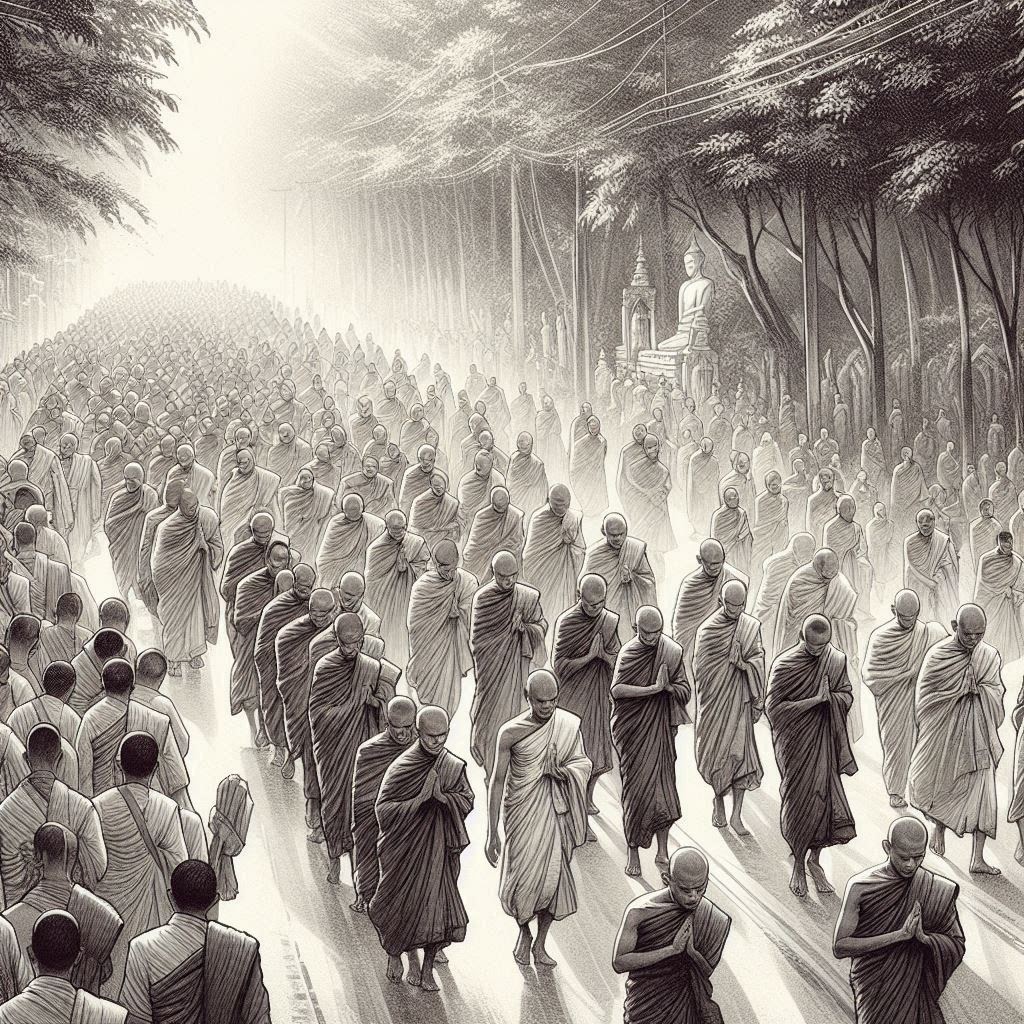
2. March of the Arahants


3. Full Lotus Turtle


4. Swimming Dragon


5. 🐙 Subtle medusa rules heaven and earth


6. 🐯 mountainside archer surrounded by tigers


7. Dragon Ascends


8. 🦍🎵 Gorilla jazz improv
After you've mastered your solo, individual exercises,
you're ready to use your vocabulary of exercises and combine them in spontaneous, unexpected ways to create new masterpieces.

full lotus, padmasana posture


Sunday, May 26, 2024

gym rings, about 75$ for good pair, spend 5 to 10 min. a day on this, great for beginners, advanced

 I've been doing this everyday for a few years now, I've told friends about how great they are, but nothing beats seeing it in video to convince you to try it.

Great for meditators and sedentary modern people.

I've been doing many of the exercises shown in this video, that I learned from others or improvised myself, it's great to see others see the health benefits discovered independently.

People do things that work, improve health, etc. 

This person just made a video a couple of days ago, they're probably paid to promote a certain brand of rings.

I don't know what my rings are, I just picked one up on amazon with high volume of purchases with good ratings.


Thursday, February 15, 2024

fun full lotus moves: finger toe spacers, and slapping palms to bubbling wells


(more detail to follow another day)

Both of these moves done starting from full lotus sit.

if you can't do full lotus, this also works from an easy partial  half lotus kind of position, so long as you have good access to your feet with your hands.


1. finger toe spacers: interlace your fingers with your toes.

For most people, this will have the effect of toe spacers 


left hand 5 finger to 5 toes of right foot.

right hand 5 fingers to 5 toes of left foot.

If anything hurts, it shows poor circulation of blood, qi, etc.

Doing this move acts as accupressure and will help dissolve blockages, pain, and discomfort over time.


1b. rotate feet and hands about ankles and wrists

with your interlaced hands and feet still attached to each other, you can make circular motions


2. slapping palms to bubbling wells, HARD.

the centers of your palms on the hands, and the equivalent spots on your feet (bubbling wells),

are major centers of energy. 

Slapping hands to feet very hard, helps to dissolve blockages.

How do you know it's working?  Over days and weeks, You may feel itchiness, on other parts of your arms and legs, or dark spots on your skin forming from lymph fluid carrying away particles that were stuck in your lymphatic system. 

When qi is flowing better in not just your hands, feet, but whole body, you will be able to tell the difference if you pay attention.

How many times should you slap yourself? 

I always go with the buffet sampler approach. I do 48 reps and then my body tells me if I need to do more. 

It's just like 4 jhāna progression. If your body feels pain, it's part of the process of your body transforming from stiff and blocked into soft and smooth energy flow. When it's getting soft, body gives you large physical sukha as inducement to tell you not to stop yet.

When transformation is complete, just like fourth jhana you get neutral sensations.


I literally slapped the shit out of myself this morning doing move #2 slapping my feet with palms


I slapped my feet about 48 times, and then I had to go excrete feces. After doing move #2, I had to go to use the bathroom #2. 


Remember the PV=nRT formula from chemistry and science class?

Jhanic force and the physical hand slap go where the "P" is in the formula.

I've also had to excrete feces after soaking my hands or feet a few minutes in hot water.

Science and jhanic force. It's real, it works, it's universal. 

What is the PV nRT law?
In such a case, all gases obey an equation of state known as the ideal gas law: PV = nRT, where n is the number of moles of the gas and R is the universal (or perfect) gas constant, 8.31446261815324 joules per kelvin per mole.


Tuesday, January 23, 2024

split squats for sitting meditators with tight hips


I discovered a great exercise to stretch all the muscles in upper leg and hip.
(and even the lower legs, calf muscles on both legs depending on careful foot placement)

split squats, but doing many reps to emphasize stretches rather than trying to dip low (knees almost to ground) to burn your thigh muscles for muscle growth.

Like Jade Wushu champ doing at beginning of video.

Body builders doing split squats to get bigger leg muscles squat lower and slower.
Jade is mostly flexing to dynamically stretch and work towards doing full splits as in Chinese wushu training.
I find the best for deep hip and upper leg stretch (for sitting meditators looking to gain pliability) is somewhere between those two extremes.

The entire video of Jade above, 10min, is really good to stretch all around the leg.
I do something similar with my crab side shuffle stretch.


Ps: gorilla warfare


There's an important lesson here on guerrilla warfare (meditators looking to add to their bag of tricks to improve pliability and flexibility).

Split squats have been around forever.

I dismissed the exercise, thinking it's just for muscle heads trying to get big muscular legs and toned butt.

And I dismissed the wushu martial artists version in Jade's video, because that crowd, like gymnasts and contortionists, practice extreme and dangerous methods to gain super flexibility.

But all these years I missed out the fact, had I not experimented with it sooner is if you tune the exercise just right, it's great for stretching many parts of the leg and thigh quickly, in one exercise (whereas normally you need 4 or 5 exercises to stretch all parts of the leg).

So the lesson as always, it's NWBH.

It's not what you do, but how you do it that determines if something is useful, safe, or dangerous.


Monday, January 15, 2024

DWTD🐕: taiji and internal arts body movement

 Ideally should move with the whole body.


What happens in practice, beginners learn by looking at what the hands and arms are doing, 

and imitate that first,  

and then dragging the rest of the body along with the hands.


Tail wagging the Dog.


It takes years, even decades for energy channels to open up, 

for one's whole body sensitivity to reach the point where one can directly can clearly see 

what body parts is leading what, and whether the whole body moves together in perfect unison.


For beginner and intermediates, if you're going to err better for the hands and arms to lag the torso and legs (tail moved by dog, lags the dog).


Saturday, December 30, 2023

VLC free video player, the optimal way to learn qigong, exercise, movement videos stepping frame by frame

For example,  say you wanted to learn how to do a 24 posture taiji form like this:

https://www.youtube.com/watch?v=qV6PjN55Lb4

Find a browser extension that downloads youtube video, download that video.

Then download the VLC player, and use the step frame by frame to pause and take the time you need to learn each posture.

Of course this can't replace in person teaching and correction where you can see movement, posture, and orientation in 3 dimensions instead of 2. 

But if you already know the 108 yang taiji form, and you wanted to learn the 24 form from this video, the VLC tool makes it incredibly easy to do so, by studying a 5 minute performance of the form, and not needing to find a 1 or 2 hour tutorial with various camera angles.


VLC (open source video player)

https://www.videolan.org/vlc/
Completely Free - no spyware, no ads and no user tracking. (they take donations)
Runs on all platforms - Windows, Linux, Mac OS X, Unix, iOS, Android ...

Extremely useful windows PC keyboard shortcuts

Press [space bar] to pause and press [space] again to resume video
Press [e] to step frame by frame forward in video (no need to pause video first).
hold down [e] to continuously step through frames, plays at about normal playing speed
There’s no step backward one frame, because of video compression makes this not easy to program.

jump forward and backwards by 3 seconds

[shift + arrow left or right] = move backward or forward by 3 seconds
[alt + arrow left or right] = move backward or forward by 9 seconds
[control + arrow left or right] = move backward or forward by 60 seconds


Friday, June 30, 2023

the squash-up: great exercise for sitting meditators, to preserve knee health


I sit cross legged on the floor. 

A lot. 4-8 hours a day.

This is what I do immediately after every sit:


48 squashups (or more, but minimum 48).

Why 48? Just an arbitrarily large number, 

but 4 should remind you of 4 noble truths,

and 8 should remind you of noble eightfold path.


What is a squashup?

Why do squats, and pushups separately, when you can do them both at the same time?

From squatting posture, have your hands also on the ground.

There's about 12-20 in. distance between your 2 hands, between 2 feet, between hand and feet, forming approximately a square shape if you were to connect the 4 planted pods on the ground. 

That's just an approximation, play with distances to see what feels comfortable.


What is the goal of this exercise?

To flex as many joints as possible, with jhānic relaxation, to maximize blood flow, lymph flow, qi flow, recover the stagnation from the sitting posture you just did.

Knees, elbows, wrists, ankles, hips, shoulders, should all be getting flexed and pumped. 

If you're doing it right it should feel good, the more reps you do the softer and warmer, more pliable the parts get.

I have most of my body weight shifted on the the upper body planted on the hands more than the legs and feet, because your knees and legs will probably be somewhat asleep, sore, etc. 

Don't go for full extension/limits on the up or down portion of the movement

In other words don't hurt yourself trying to squat push all the way down and all the way up to whatever you imagine "correct posture" looks like. The goal is to prevent injury, not gain injury, and to just move and pump blood into body that parts that are asleep and stagnant

If you're doing the exercise right, you should improving the health of your legs from the increased circulation of everything: blood, lymph, oxygen, qi, etc.

It's like if a beaver damned up a lot of the energy channels in your legs, doing enough repetitions of this exercise should tear down those dams and get the fluid pumping everywhere again. Sorry beavers.


I've been doing this over a year, got great results

My knees feel better now, I'm an old man in my 50's, then they did when I was in my twenties.

It's not just this exercise of course, I do several important exercises from the qigong gorilla arsenal every day, but for sitting meditators who sit a lot, hours every day, you need to be doing this one or something equivalent, or your knees are going to kill you when you get old. 


So right after every sit, I spend about 1 minute doing this:

48 reps at least of squashups

18 reps of cat and the scat (at least)

🙀🐈💩the cat and the scat: great exercise for sitting meditators, squatting safely

https://qigor.blogspot.com/2020/11/the-cat-and-scat-great-exercise-for.html


for cat and scat, as with squashups, you want to be careful to put more of your body weight onto your hands, so your legs and knees don't have to deal with extra strain of heavy load.

Basically, it's like the legs are just squatting just the legs mass, not your whole body mass if you were doing standard standing squats.


Friday, June 16, 2023

'bouncing' + rock the baby: more ideas on why 🏃👨‍🍳🥧 'shake and bake' is so effective


Shake & Bake🏃👨‍🍳🥧  


Why does rocking calm a baby?
The rocking sensation is thought to have a synchronizing effect on the brain, triggering our natural sleep rhythms (2). Slow rocking can help your baby ease into sleep mode and increase slow oscillations and sleep spindles (3) in their brain waves.Nov 3, 2020


Why is it important to rock a baby?
Rocking a child helps establish a healthy heart rate as well as good blood circulation. The rocking motion helps the child feel secure and therefore has a calming effect. Rocking can also help warm a child who is cold.


Some babies instinctively do accupressure and 'shake and bake' to achieve kāya-passaddhi (for jhāna) and sleep!

What does rocking in babies mean?
Head banging and body rocking are common ways that children soothe themselves to sleep. It is disturbing to parents, but usually not a problem unless the movements hinder sleep or result in injury.Aug 18, 2020


Why is rocking comforting?
Rocking had a soothing effect. In one study published in the journal Current Biology, it is posited that “the sensory stimulation associated with a swinging motion exerts a synchronizing action in the brain that reinforces endogenous sleep rhythms,” which may explain why rocking induces that relaxed feeling.Oct 22, 2020

 excerpt:

I’ve taken the deep breaths, the warm baths, the Xanax. I’ve tried candles and crystals and sitting cross-legged. But nothing can calm me quite like rocking. Here’s what that looks like: An adult man, mid-30s, finishes work and climbs into bed. It’s early evening still, the shades are drawn, he has yet to cook dinner. The day has been hectic — deadlines, dog to the vet, a leak beneath the sink — but that’s all behind him now, a soft quiet settling in. His head rolls on the pillow, with intention and control, from side to side, each ear touching down like the taps of a metronome. Tap. Tap. Tap. His hips follow suit, and soon his whole body is in one smooth kinesis. He feels his pulse slow and his breaths even out. He’s free, dreaming of other worlds, worlds with many moons, with humming tides. Twenty minutes pass, and something brings him back to Earth — a car alarm, or his partner asking from another room what he’s making for dinner. He climbs out of bed, lighter, less burdened. Spaghetti, he thinks.

To the American Academy of Sleep Medicine, this scene might ring a bell, summoning a term that sounds like something you may see at a remarkably boring jazz show: “sleep-related rhythmic movements,” or SRRMs. Characterized by repetitive and rhythmic motor behaviors, these movements occur mostly during quiet wakefulness or the early stages of sleep. For me, they include head and body rocking and rolling, but other movements are possible as well. And if they go so far as to disturb one’s sleep or daytime function in a profound way, or even cause an injury, a disorder diagnosis is made. SRRMs are typical in infants and children, and become less prevalent with increasing age, usually disappearing spontaneously before adolescence. Rarely are they seen in adults — but somehow here I am, approaching 40, still rocking to the beat.

My earliest memory is as a 3-year-old, when I graduated from crib to training bed. My parents tucked those guardrail bumpers beneath both sides of my mattress — a drowsy toddler in a stalled spaceship. I would rock up on my hands and knees, and then somehow fall awkwardly onto my back and into a sound sleep. My parents never thought of it as worrisome or something that needed fixing. “You were such a cute Martian in there,” my mother said to me once.

As I grew up, I finessed my technique and began to rock solely in a supine position, head rolling side to side. I gained more and more control over it — from compulsion to volition — and I recognized benefits beyond the sleep-inducing. Rocking had a soothing effect. In one study published in the journal Current Biology, it is posited that “the sensory stimulation associated with a swinging motion exerts a synchronizing action in the brain that reinforces endogenous sleep rhythms,” which may explain why rocking induces that relaxed feeling. For me, it’s a shortcut to Chill Town. It makes me less anxious, more present. And beyond all that, it just feels good.

...

frankk experience with 'rock the baby' effect:

when I was a child, no qigong experience, I always noticed when sleeping on a moving school bus, or in a moving car, that the frequency of the vibrations of automotive vehicles traveling and bouncing on  roads (even smoothly paved ones), was very comforting and made falling asleep easier.

In hindsight, the science of why rocking the baby works well applies there, and to 'shake and bake' as well, and how that can help with passaddhi-bojjhanga (pacification awakening factor) that enables the physical part of jhāna to happen.

The video below explains how bouncing, shake and bake, rocking the baby helps tune the energy channels and dissolve blockages in the body.

bouncing is a mild form of 'shake and bake'

10 min video: 
Just Use This & Your All Energy Blockages Will Be Cleared in 3 Seconds | Chunyi Lin


Ido Portal has something similar to 'bouncing'


Thursday, June 8, 2023

6m video in chinese, showing accupressure point to relieve allergy, hay fever


6m video in chinese, showing accupressure point to relieve allergy, hay fever 

https://www.youtube.com/watch?v=S4pNrmH3aEw

The spot under the mid cheekbones, when you press there it should feel more senstive and painful than surrounding facial area if you're suffering from allergy.


Do 36 small circles at those cheekbone points.

The next part where you trace path from cheek bone point to nose/eye area, 

trace that track with your finger 36 times.


The last part of the video pushing on point below knee has something to do with strengthening your immune system from colds.


Friday, April 28, 2023

Shake and bake vs. rebounding (a gentler mini trampoline)


2m. vid on rebounding

https://www.youtube.com/watch?v=8GIR2x5ERAg


8 min. vid, good 3d color video and scientific explanation from NASA research

https://www.youtube.com/watch?v=Jrtwq60n-Ds


Shake and bake vs. rebounding


If I get a chance, I'd like to try out a rebounder trampoline to compare.

But my guess would be, 

 🏃👨‍🍳🥧  shake and bake


is free, requires no equipment, you can do anywhere anytime.


rebounder requires bulky equipment (costs how much?), so you can't do anywhere anytime.


Where rebounding might have advantage over S&B


Seems like the only way 'rebounding' would be more effective and shake and bake, would be an advanced level as in the second video where the guys are on the huge trampoline doing flips, rolls in midair would shake your lymph around more than the vertically bound shake and bake.


Sunday, August 14, 2022

shake and bake journal from friend BP

BP is a jhāna meditator somewhere in their twenties or thirties.

This is from a private conversation I had with him, that he agreed to share, hoping more people will try to incorporate jhāna into every moment of their life, and using shake and bake exercises daily to prime the body for optimal jhāna.

4👑☸ → ☯🦍 → shake and bake 🏃👨‍🍳🥧


frankk to his meditator friend BP


those are good, [those mobility exercises] you're doing. But once a week isn't going to cut it.
You don't eat once a week, and you don't breathe once a week. 
Even with your busy schedule, you can do a lot more on a daily basis.
Instead of being in a static posture every time you're in deep thought working on your [job] or whatever homework, you can deep think while in a standing forward bend, or shake and bake, stationary bike, whatever. 
Shake and bake is a miracle game changer.
I've fixed health problems and my knees, leg parts, are getting better than they were when I was in my early thirties. 
In my early thirties, I could sit full lotus 20-30m comfortably, 45m to 60m things start to hurt. Now in my fifties, I can sit 60-90min comfortably full lotus.
Some of my meditation injuries were feet, ankles, parts of leg nerve damage and partially numb from too much sitting meditation. 
This is a common problem in burmese meditation systems.
Nerves are slow to regenerate, but they do. Shake and bake and the other exercises do are essential.

Without shake and bake, the same things I'm doing daily would not be nearly as effective.
This is especially true with vegans, vegetarians with cold body types, but even omnivores with hot body temperature probably have cold parts. If anyone has hip, knee problems, then there are cold body parts with poor or suboptimal circulation.

   
The two really big ideas that I learned in the last few years, would have made my improvement so much faster if I knew this when I was young
1. partial jhāna can be done all the time, all postures
2. sustainable, enjoyable daily exercise, throughout the day. high volume of very easy to do things makes it enjoyable and sustainable. For example, every hour take at least 2 minutes to do something. pushups, squats, mobility exercises.

what I do daily, in terms of rough quota of time and exercises to hit full range of body expression


The reason I asked about taiji, is if you learn a good system, it will really help you understand and be able to do partial jhāna in all postures, all day long.
That's the real key to fixing legs, and at any age. When jhanic force increases, it pushes out circulation of blood, lymph, qi, stronger and to all the extremities. That's why I can sit full lotus longer and longer as I age.

If you have strong jhana and apply it to a balanced diverse exercise regimen, do shake and bake as I recommend, it will fix most of the problems you know about that you currently have, and will fix and prevent problems you're not even aware of.

Taiji done correctly, is basically fourth jhana with kayagatisati at its best. As opposed to kayagata with lots of injuries and health problems as you get older.


I took the time and effort to write and share this, because we always hope we can help others avoid problems with easy solutions that we wish we knew about when we were young. And seeing as we have similar interests, and likely to have some similar health problems from sedentary lifestyle [common to modern people sitting on computers all day], I hope you can appreciate I have extremely high confidence in the efficacy of these exercises and methods.


At the same time, I'm not a proselytizer and taiji and good physical health is just not a priority for some people.

So I will say no more, unless you ask and show interest.

I share everything I think is of value under the qigong gorilla section, 
 but if no one's asking questions, I know they're probably not doing it. It's like jhāna, I could write a super detailed explanation, and one can understand it fully on an intellectual level, but you should have questions and your understanding of the same points will change as your practice deepens.


BP to frankk

Thanks for the comments. I meant I do the cardio about once a week. I do the stretches daily. Probably I need to do cardio 3-4 times a week instead,
but that’s where I’m at right now.

I do like doing a few shaking movements I learned from a qigong vid-“wild horse shaking” and the 8th brocade “shaking to ward off all illnesses” which are similar except for the arms being in front vs resting on the back. I also do a few other qigong-like motions, not sure what they are called (also learned from a qigong vid). These are more just things I do during breaks-they aren’t anything I have a systematic training routine for. I like the idea of moving around more while thinking, although frequently I need pen and paper to work out my ideas. Maybe dictation to my phone could work there.

I work in 50-20 cycles of work/break time. Usually go on a walk during the break, or meditate.

Yeah the partial jhana at all times thing is super important. I can’t fully maintain the “connection” to jhanic joy at all times yet, but it’s improving. I’ve noticed recently that even sometimes when getting caught in conversations with roommates it’s begun to feel like “they have entered into my practice” instead of “I have been dragged away from practice”. Heh, I end up saying some very direct things about poor behavior in a dispassionate way as a result, which seems to be helpful for everyone. [friend's] advice here to view  the defilements in another person’s mind as something to work on just as if they were in my own mind is helpful here.

Safely doing full lotus seems like a pipe dream to me! Maybe one day if I keep up the daily stretching as a “lifetime habit”. 


frankk to BP


jhanic joy (both physical and mental) is unreliable, because when fourth jhana becomes the normal, neutral sensations become the norm, just as your body stops giving you pleasure chemicals when you're not hungry anymore.

The only reliable jhanic markers are the sensation of jhanic force pervading the entire body, singular focus of mind, and bubbly or electrical sensations wherever you direct attention on the body, even the entire body all at once, since nerves get more sensitive and expansive. 
It's instant on for jhana, so even in the midst of walking around talking to people, you will be able to freqeuently connect with micro moments of jhana where you feel jhanic force surge or pulse in your body.

nothing wrong with mental joy if you want to sankhara that and maintain that and feel you need it at the time. But also practice your best version of noble silence at whatever your highest jhana level is, being able to instantly turn it on, keep it on, and when it's not possible to do that, take micro jhana breaks. When I chant, every pause, even less than a second, I get a micro jhana session in there just to train that ability of always on, always zen. 

The question monastics and serious yogis should be asking is not, "can I do jhāna?"
but instead, "can I turn it on like a switch, keep it on, think only thoughts I want to think and not think ones that I don't?"
and, "can I do attain better than third jhāna, which is the 'normal' level of samādhi the buddha expects for his disciples?" 


After twenty minutes, body totally transformed by S&B shake and bake

The thing with shake and bake, if you do it several times a day, and always before you stretch, your static stretches are going to improve much more. If you really get to understand the benefits of s&B (or an equivalent cardio that you enjoy) that can heat up your body, then you won't think full lotus is a pipe dream, you'll really start to experientially understand that the 4 elements can be harmonized with the right training. When I do shake and bake for 20 minutes, after 20min my body is totally different, like a bag of water, aches in the right shoulder areas gone, tight ankles dissolved, movement and reflexes get faster, stretches are more effective when the body is pliable. Going from cold start, it's really hard to make net progress.
And my baseline stiffness for right when I start a shake and bake session is starting to improve.
I also used to think certain parts of my shoulder and back pain were never going to completely disappear, now I don't know. The shoulder tightness mild pain even from cold start is declining, at this rate in a year or two my baseline cold start will have no tight shoulders, it will be like my current 20 min. S&B mark where shoulders turn into bag of warm water with no pain. 


BP's first try at Shake and Bake

I experimented some with your shake and bake idea today. It does seem helpful, especially for shoulder and neck tension. The gentle bouncing of something like the 8th brocade is made more effective by the elevated pulse and placidity created by mild cardio and light jumping. I'll keep experimenting, thanks.

Sitting cross legged to eat lunch today also seemed a bit looser too.


frankk responds, gorilla buffet samplers

what i expect would happen is you'll keep finding out s+b is so good you should be doing it more (both more short 1-5 min. warmup before any other stretching activity  through out the day, and just in total minutes in aggregate daily).

if you want to know the effectiveness of an exercise, that's something i do in general, test it all the time. i call it the gorilla buffet sampler. example: I always do one plough helicopter suite before each sit (10-30 sec.), and based on how that feels, I'll do  2-5 more times spliced in with counter stretched backbends such as updog. So the principle is take a small bite at the buffet, and based on how good it tastes it tells you how much of it you need to eat.

So 30 years ago when my neck and shoulders were huge problems, I did a few minutes of turtle exercises every hour. Now I probably do just 2 minutes of turtle total daily, but I still buffet sampled it 10-20 times per day.

'assess to progress': basically, sati and sampjano applied to your body condition. constantly lucidly discerning what the condition is, what needs to improve
'inject bottle neck' giving more time and attention of problem areas,  
'finish diminish' decrease time in exercises that are giving you dimnsishing returns
'finish the mission of exploitation' increase time in things where you're not harvesting that benefit enough even though it's right there for the taking.

with s+b shake and bake i don't ever see it being less than 20 min a day total, divided into at least 5-10 sessions spread out the day. as you age you're only going to get colder and stiffer no matter if you've got perfect routine ever invented. So if not s+b, something gentle cardio that will warm up and make body more malleable.
and nothing gets higher quotient of jhana while warming up than s+b, though if you find something reasonably close that you like better, than do that instead.

i'm constantly still testing and experimenting too. for example, i've tried just doing a coupel minutes of pushups or squats as a warm up... 


BP after one day, feels noticable hip improvement

It seems useful so far. Surprised at how much “smoother” hip motion felt after one day of it only. Maybe it’s placebo though, will have to keep testing.


One (maybe) negative side effect is that while it feels like the stiffness in my neck and and shoulders is “breaking up”, I also feel a sense of inflammation there. The feeling is like tiny toxins are being released as a result of breaking up knots. There’s more “crackling” as well. Maybe I let my upper body wobble too much before getting used to the motions. It does seem to be fixing the knots though, just feels like there are little “pieces” of the knots knocked loose that the body needs to “digest”/“process”.


BP after two days of S&B

On Day 3 total of trying out your shake and bake. I'm really impressed by the results so far. This is the first time I've really felt such obvious progress for flexibility and mobility in such a short time. Previously I was trying to only measure my improvements in terms of several weeks, so I wouldn't get discouraged day by day. With this, the progress is immediate and obvious. Maybe it's just 'beginner gains' though, we will see.

I've been emphasizing hip external rotation as well by externally rotating the hips (not a huge amount, just enough to activate and relax the hip) in each of the jumps for shake and bake. (As if you were trying to touch your foot with the opposite hand.). Other variations I've tried: arms in front, hands resting in back (causes more bouncing in shoulders and neck), hands overhead with palms slightly facing up, arms directly out to the sides, small side-shuffling motions (more bouncing in adductors), and slight internal rotation of hips each bounce (very slight, just enough to intend it). 

The neck inflammation I mentioned is gone already by the way. My neck is dramatically more relaxed as well-I notice this especially when laying down to sleep at night. Previously the tightness sometimes made it harder to fall asleep easily.

I also am experimenting with adding 'drop and bounce' motions to various stretches where I pull back from the stretch and then relax the muscles entirely so they drop into the stretch and naturally bounce at the end of the range of motion. It seems to have a similar feeling.

The main drawback is how ridiculous it looks. Or perhaps that's just good dhamma practice Emoji.


frankk response, wish more people would do S&B

keep tracking your progress, and please publish or give me permission to publish some form of it when you've got a good sample size you want to share.

I really want more people, not just meditators, to try it out and get the health benefits of this, and having more testimonials will help get the word out.

I don't think you're going to ever find s+b not helping.

I wake up at 2am everyday, do s+b for twenty min., then some meditation. Got on my computer (desk switches between standing and sitting, highly recommend), stood for about 90min working on sutta translation, felt my back getting a little uncomfortable, did s+b for 5 min. and instantly fixed. The older you get, the more easily you can incorporate jhana into your standing, walking, and even s+b, you're going to appreciate s+b more and more. It's like sitting meditation, eating, breathing, it's never going to go out of style or beyond your frequent needs.


After one week, BP shares progress on S&B


So still doing shake and bake, it's been a bit over a week now I think. It's a ridiculous exercise that has benefited me physically in pretty much every way possible. My hip flexibility is dramatically improving, and I'm getting to the point where sitting cross-legged is 100% comfortable, whereas in the past it's always felt tense in some way or another. My energy levels are dramatically increased (even compared with times I did "normal" cardio). Knots and tensions in my neck and shoulders are disappearing. Hip 'clicking' is disappearing, even when doing large hip motions. I noticed my sleep needs have also decreased, by how much I'm still figuring out--but now when I lay down to sleep at night I have tremendous amounts of leftover energy. Currently I've reduced my sleep by 30 minutes (reduced to 8 hours) compared to before starting shake and bake. I'm even currently sick, and despite that I have more energy when not ill than I did before starting shake and bake! My mind is also clearer, and it's easier to put in effort to annihilate the unwholesome when it rears its ugly face.

All of these benefits from a single low-intensity exercise seem unbelievable to me, and yet the improvements continue to keep coming.

I incorporated the principles of shake and bake into my stretch routines as well, which I mentioned before. I'm now of an opinion similar to you about static stretching-I can feel tensions building up if I hold a static stretch for too long. Seems the ideal thing to do is do short static holds ~10 seconds, alternated with a round of bouncing/swaying/jiggling etc near the end of the range of motion. The alternation between the two is rapidly increasing my flexibility gains. Keeping the body warm and pliant seems critical for gaining fast progress with stretches. I feel confident that I'll be sitting Burmese style in maybe 2 months, instead of the previous estimate of ~4 months. Perhaps even faster, will have to see.

Some notes on increasing the benefits: open jaw slightly to relax it more, move the neck very, very slightly in different directions and hold there while bouncing to help relax different parts of neck and shoulders, gently open and close the chest to relax the upper back, and spine more,  place the hands on the tops of the shoulders to dramatically loosen shoulders (looks like 'chicken wings', works best with jumps with both legs at the same time), emphasis should always be on maximizing the amount of relaxation and 'bounciness' instead of on going fast, short 1/2 second pauses can be helpful to let the body relax and oscillate/bounce after a jump (for jumping with both legs), and for the calves which are harder to relax for me during the jumping you can sit in a seated forward fold position and 'drop and bounce' the legs to relax them. Let me know if you want me to clarify any of these notes.

This does seem like the ideal lifelong exercise, especially for renunciants who are going to be entirely focused on health benefits instead of looking good or looking cool while doing the exercise..